
CAPM Exam Dumps - Certified Associate in Project Management (CAPM)
Searching for workable clues to ace the PMI CAPM Exam? You’re on the right place! ExamCert has realistic, trusted and authentic exam prep tools to help you achieve your desired credential. ExamCert’s CAPM PDF Study Guide, Testing Engine and Exam Dumps follow a reliable exam preparation strategy, providing you the most relevant and updated study material that is crafted in an easy to learn format of questions and answers. ExamCert’s study tools aim at simplifying all complex and confusing concepts of the exam and introduce you to the real exam scenario and practice it with the help of its testing engine and real exam dumps
A project manager is identifying the risks of a project. Which technique should the project manager use?
Representations of uncertainty
Prompt lists
Audits
Risk categorization
Answer:
Explanation:
According to the PMBOK® Guide (6th Edition), the Identify Risks process is the process of identifying individual project risks as well as sources of overall project risk, and documenting their characteristics.
Prompt Lists are a specific Tool and Technique used during this process. A prompt list is a predetermined list of risk categories that might give rise to individual project risks and that could also act as sources of overall project risk. It acts as a framework to provide the project team with a " head start " in the identification process.
Common frameworks used as Prompt Lists include:
PESTLE: Political, Economic, Social, Technological, Legal, Environmental.
TECOP: Technical, Environmental, Commercial, Operational, Political.
VUCA: Volatility, Uncertainty, Complexity, Ambiguity.
Analysis of Distractors:
A (Representations of uncertainty): This is a tool used in Perform Quantitative Risk Analysis. it involves creating models (like probability distributions) to represent the potential impact of risks, rather than identifying the risks themselves.
C (Audits): These are used in the Monitor Risks process to evaluate the effectiveness of the risk management process and the risk responses. They are used to verify compliance and performance, not for the initial identification of risks.
D (Risk categorization): While this sounds like a method to identify risks, it is actually a technique used in Perform Qualitative Risk Analysis. It involves grouping identified risks by their sources (using a Risk Breakdown Structure) to determine which areas of the project are most exposed to uncertainty.
Key Document Reference: Section 11.2.2.9 of the PMBOK® Guide identifies prompt lists as a critical tool for ensuring a comprehensive identification session, preventing the team from overlooking common sources of risk.
What is the purpose of the project schedule management.
Estimates specific time and the deadline when the products, services and results will be delivered.
Determines in details the resources and time that each task will require to be done
Represents how and when the project will deliver the results defined in the project scope.
It provides the relationships among the project activities and their risks.
Answer:
Explanation:
According to the PMBOK® Guide, Project Schedule Management includes the processes required to manage the timely completion of the project. Its primary purpose is to provide a detailed plan that represents how and when the project will deliver the products, services, and results defined in the project scope.
Linking Scope to Time: The schedule serves as a communication tool that links the work to be done (Scope) with the timeline for completion. It provides a baseline against which the project manager can track progress.
The Schedule Model: The schedule is more than just a list of dates; it is a dynamic model that incorporates activities, durations, dependencies, and resource constraints.
Stakeholder Alignment: It provides a vehicle for communicating with stakeholders and managing their expectations regarding the delivery of project milestones and final results.
Analysis of other options:
A. Estimates specific time and the deadline: While the schedule does include dates and deadlines, this definition is too narrow. Schedule management is a continuous process of planning, developing, and controlling the timeline, not just a one-time estimate of a deadline.
B. Determines in details the resources and time: This description overlaps significantly with Project Resource Management. While resource requirements are an input to the schedule, determining the details of the resources themselves is not the primary purpose of schedule management.
D. Relationships among activities and their risks: While sequencing activities (relationships) is a process within schedule management and risks are considered, this statement ignores the " when " (the time element) and the " what " (the deliverables/results), making it an incomplete definition of the knowledge area ' s purpose.
Per PMI standards, Project Schedule Management is the formal mechanism for ensuring that the project scope is transformed into a logical, time-bound execution plan.
Which of the following is TRUE about most project life cycles?
Staffing level is highest at the start.
The stakeholders ' influence is highest at the start.
The level of uncertainty is lowest at the start.
The cost of changes is highest at the start.
Answer:
Explanation:
According to the PMBOK® Guide, specifically within the section covering Project Life Cycle and Organization, all projects—regardless of size or complexity—share a generic life cycle structure. This structure reveals several key characteristics regarding cost, staffing, risk, and stakeholder influence over time.
Stakeholder Influence, Risk, and Uncertainty: These factors are at their highest at the start of the project. As the project progresses and more decisions are made and deliverables are accepted, the ability of stakeholders to influence the final characteristics of the project ' s product without significantly impacting cost decreases.
Risk of Failure: Similar to stakeholder influence, the uncertainty and risk of failing to achieve the objectives are greatest at the start of the project. These factors decrease over the project life cycle as decisions are reached and deliverables are accepted.
Cost of Changes: Conversely, the cost of making changes and correcting errors typically increases substantially as the project approaches completion. A change that costs very little during the Initiating phase could be prohibitively expensive during the Closing phase because the work would have to be undone and rebuilt.
Cost and Staffing Levels: These are typically low at the start, peak as the work is carried out (Executing phase), and drop rapidly as the project draws to a close.
Comparison with other options:
A. Staffing level is highest at the start: This is false. Staffing levels are generally low at the start, peak during the intermediate phases (Executing), and fall off as the project nears completion.
C. The level of uncertainty is lowest at the start: This is false. Uncertainty (and the risk of failing to meet objectives) is at its highest at the start of the project due to the lack of detailed information.
D. The cost of changes is highest at the start: This is false. The cost of changes is lowest at the start and increases exponentially as the project progresses and more resources are committed to a specific path.
A project lifecycle is defined as:
a collection of generally sequential and sometimes overlapping project phases.
a process required to ensure that the project includes all the work required, and only the work required, to complete the project successfully.
a recognized standard for the project management profession.
the application of knowledge, skills, tools, and techniques to project activities to meet the project requirements.
Answer:
Explanation:
According to the PMBOK® Guide, the Project Life Cycle is the series of phases that a project passes through from its start to its completion.
Structure: It provides the basic framework for managing the project. These phases are generally sequential, meaning one starts after the previous one finishes, but they can be overlapping (a technique known as " fast-tracking " ) to compress the project schedule.
Phase Characteristics: Each phase is a collection of logically related project activities that culminates in the completion of one or more deliverables. Common phase names include Feasibility, Design, Build, Test, and Deploy.
Consistency: While every project has a start and an end, the specific life cycle used (Predictive, Iterative, Incremental, or Agile) will vary depending on the industry, the organization, and the nature of the project itself.
Analysis of Other Options:
B. a process required to ensure that the project includes all the work required...: This is the formal definition of Project Scope Management, not the project life cycle.
C. a recognized standard for the project management profession: This describes the PMBOK® Guide itself or other PMI standards, which document the " generally recognized " good practices in the field.
D. the application of knowledge, skills, tools, and techniques...: This is the formal definition of Project Management as a discipline.
Why is required in a project?
Because a one-size-fits-all approach avoids complications and saves time.
Because every project is unique and not every tool, technique, input, or output identified in the PMBOK Guide is required.
Because tailoring allows us to identify the techniques, procedures, and system practices used by those in the project.
Project managers should apply every process in the PMBOK Guide to the project, so failoring is not requires.
Answer:
Explanation:
According to the PMBOK® Guide, Tailoring is a necessary aspect of project management because projects are unique. Not every project will require every process, tool, technique, input, or output described in the standards.
Uniqueness of Projects: Every project exists in a different context, with different levels of complexity, risk, size, and team experience. Therefore, the project manager and the project management team must select only those processes that are appropriate for that specific project.
Competing Constraints: Tailoring ensures that the project manager considers the competing constraints of scope, schedule, cost, resources, quality, and risk. By choosing the right " fit, " the team avoids wasting time and resources on unnecessary documentation or bureaucratic steps that do not add value to the project ' s outcome.
Professional Responsibility: It is the responsibility of the project manager and the project management team to determine which processes are relevant. This decision-making process is based on organizational culture, stakeholder needs, and the specific nature of the work.
Why other options are incorrect:
Option A: A " one-size-fits-all " approach is actually what the PMBOK® Guide warns against. This approach often leads to inefficiency, as small projects might be overwhelmed by heavy processes, and large projects might be under-managed.
Option C: While tailoring involves looking at techniques and procedures, the primary reason for it is to ensure the management approach fits the unique needs of the project, not just to identify what others are doing.
Option D: This is incorrect because applying every single process to every project (sometimes called " over-management " ) is counterproductive and inefficient. The PMBOK® Guide is a framework of best practices, not a rigid set of rules that must be followed in their entirety for every project.
A project manager is leading a project in a volatile industry. Industry standards are updated often, which requires the project team to make frequent adjustments to their work.
What should the project manager create to manage the possible changes?
Communications management plan
Cost management plan
Risk management plan
Quality management plan
Answer:
Explanation:
In a " volatile industry " where " industry standards are updated often, " the primary challenge is ensuring that the project ' s deliverables remain compliant with those changing standards. This falls directly under the umbrella of Quality Management.
Why Choice D is correct:
Compliance and Standards: The Quality Management Plan is the component of the project management plan that describes how the project will implement the organization’s quality policy and ensure the project meets its required standards.
Managing Adjustments: When standards change, the requirements for what constitutes a " high-quality " or " compliant " deliverable also change. The Quality Management Plan defines the processes for Quality Assurance (auditing the standards) and Quality Control (checking the work), providing a framework for the team to pivot and adjust their work to stay in alignment with the industry.
Prevention over Inspection: By having a robust quality plan, the project manager can build in " check-ins " to scan for updated industry regulations, preventing the team from completing work that is already obsolete.
Analysis of other options:
A (Communications management plan): While you need to communicate about the changes, this plan dictates who gets what information and when. It doesn ' t provide the technical or procedural framework for adjusting the actual work to meet new standards.
B (Cost management plan): This plan manages the budget. While changes to standards might cost more money, the cost plan doesn ' t help you manage the nature of the work adjustments—it only manages the financial fallout.
C (Risk management plan): While changing standards are a risk, the risk plan identifies and prepares for uncertain events. The prompt describes a situation that happens " often " and requires " frequent adjustments, " shifting it from a potential risk to a recurring operational quality requirement.
Key Concept: The Project Management Institute (PMI) emphasizes that Quality is the degree to which a set of inherent characteristics fulfills requirements. In a fast-moving industry, the Quality Management Plan (Choice D) is the essential tool for maintaining the integrity of the project ' s output, ensuring that the final product is not only finished on time but is actually usable and legal within its current industrial context.
Which of the following are processes associated with Project Cost Management?
Develop Costs. Estimate Costs, Determine Budget. Control Costs
Develop Budget, Determine Budget, Determine Risks, Control Costs
Plan Cost Management, Estimate Costs. Determine Budget. Control Costs
Plan Budget Management. Determine Budget, Create Cost Accounts. Control Costs
Answer:
Explanation:
According to the PMBOK® Guide (6th Edition), the Project Cost Management knowledge area is concerned with the processes involved in planning, estimating, budgeting, financing, funding, managing, and controlling costs so that the project can be completed within the approved budget.
There are exactly four processes within this knowledge area:
Plan Cost Management: The process of defining how the project costs will be estimated, budgeted, managed, monitored, and controlled.
Estimate Costs: The process of developing an approximation of the monetary resources needed to complete project work.
Determine Budget: The process of aggregating the estimated costs of individual activities or work packages to establish an authorized cost baseline.
Control Costs: The process of monitoring the status of the project to update the project costs and managing changes to the cost baseline.
Analysis of Distractors:
A (Develop Costs): " Develop Costs " is not a recognized PMI process name. The correct term is " Estimate Costs. "
B (Determine Risks): This process belongs to the Project Risk Management knowledge area. Additionally, " Develop Budget " is not a formal process name (it is " Determine Budget " ).
D (Plan Budget Management / Create Cost Accounts): While cost accounts exist within the Work Breakdown Structure (WBS), " Create Cost Accounts " is not a standalone process. " Plan Budget Management " is also incorrect; the process is " Plan Cost Management. "
Key Document Reference: Section 7.0 of the PMBOK® Guide introduces these four processes as the standard framework for ensuring financial integrity throughout the project life cycle.
Select three processes that are associated with Project Schedule Management.
Define Activities
Plan Resource Management
Estimate Activity Durations
Develop Schedule
Acquire Resources
Answer:
Explanation:
According to the PMBOK® Guide, the Project Schedule Management knowledge area includes the processes required to manage the timely completion of the project. There are six processes in this knowledge area, and the three correct options from your list are:
A. Define Activities: This is the process of identifying and documenting the specific actions to be performed to produce the project deliverables. It breaks down work packages into schedule activities.
C. Estimate Activity Durations: This is the process of estimating the number of work periods needed to complete individual activities with estimated resources. It uses inputs like the activity list and resource requirements.
D. Develop Schedule: This is the process of analyzing activity sequences, durations, resource requirements, and schedule constraints to create the project schedule model for project execution and monitoring and controlling.
Analysis of other options:
B. Plan Resource Management (Option B): This process belongs to the Project Resource Management knowledge area. It involves defining how to estimate, acquire, manage, and use team and physical resources.
E. Acquire Resources (Option E): This is also part of Project Resource Management. It is the process of obtaining team members, facilities, equipment, materials, supplies, and other resources necessary to complete project work.
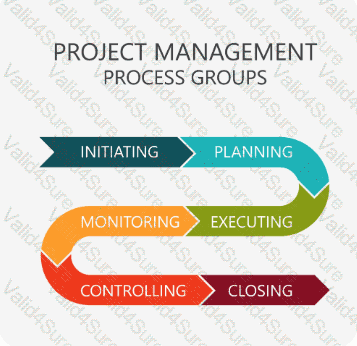
Per the PMI standards, the full sequence of Schedule Management involves Planning, Defining Activities, Sequencing Activities, Estimating Durations, Developing the Schedule, and finally, Controlling the Schedule.