
NSE5_SSE_AD-7.6 Exam Dumps - Fortinet NSE 5 - FortiSASE and SD-WAN 7.6 Core Administrator
Searching for workable clues to ace the Fortinet NSE5_SSE_AD-7.6 Exam? You’re on the right place! ExamCert has realistic, trusted and authentic exam prep tools to help you achieve your desired credential. ExamCert’s NSE5_SSE_AD-7.6 PDF Study Guide, Testing Engine and Exam Dumps follow a reliable exam preparation strategy, providing you the most relevant and updated study material that is crafted in an easy to learn format of questions and answers. ExamCert’s study tools aim at simplifying all complex and confusing concepts of the exam and introduce you to the real exam scenario and practice it with the help of its testing engine and real exam dumps
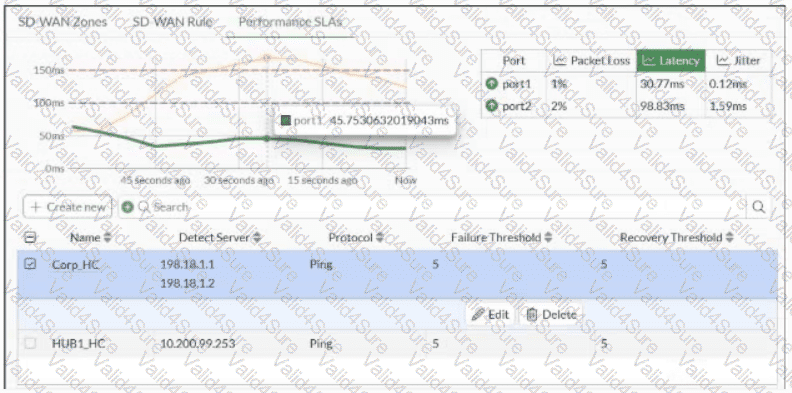
Which two statements about configuring a steering bypass destination in FortiSASE are correct? (Choose two.)
Which FortiSASE feature monitors SaaS application performance and connectivity to points of presence (POPs)?
Refer to the exhibit.
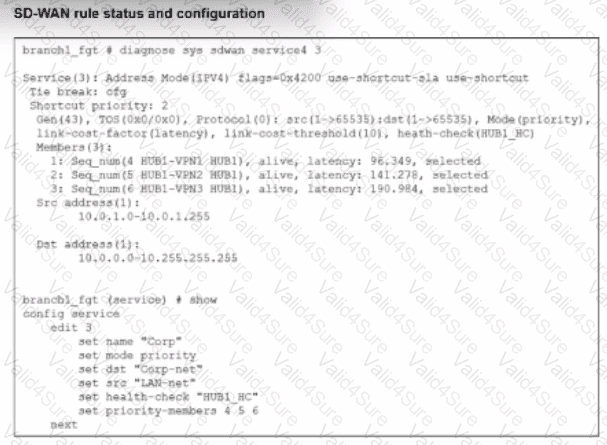
The SD-WAN rule status and configuration is shown. Based on the exhibit, which change in the measured latency will first make HUB1-VPN3 the new preferred member?