
HCVA0-003 Exam Dumps - HashiCorp Certified: Vault Associate (003) Exam
Searching for workable clues to ace the HashiCorp HCVA0-003 Exam? You’re on the right place! ExamCert has realistic, trusted and authentic exam prep tools to help you achieve your desired credential. ExamCert’s HCVA0-003 PDF Study Guide, Testing Engine and Exam Dumps follow a reliable exam preparation strategy, providing you the most relevant and updated study material that is crafted in an easy to learn format of questions and answers. ExamCert’s study tools aim at simplifying all complex and confusing concepts of the exam and introduce you to the real exam scenario and practice it with the help of its testing engine and real exam dumps
After decrypting data using the Transit secrets engine, the plaintext output does not match the plaintext credit card number that you encrypted. Which of the following answers provides a solution?
$ vault write transit/decrypt/creditcard ciphertext= " vault:v1:cZNHVx+sxdMEr....... "
Key: plaintext Value: Y3JlZGl0LWNhcmQtbnVtYmVyCg==
You are using an orchestrator to deploy a new application. Even though the orchestrator creates a new AppRole secret ID, security requires that only the new application has the combination of the role ID and secret ID. What feature can you use to meet these requirements?
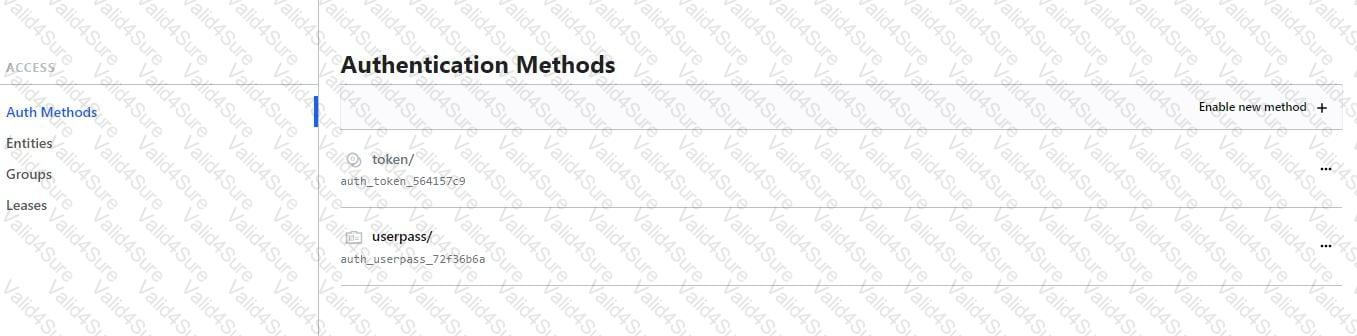
Based on the screenshot below, how many auth methods have been enabled on this Vault instance?
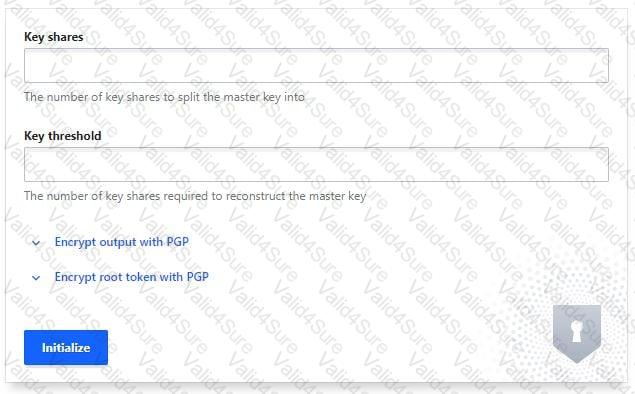
You’ve hit the URL for the Vault UI, but you’re presented with this screen. Why doesn’t Vault present you with a way to log in?
Tommy has written an AWS Lambda function that will perform certain tasks for the organization when data has been uploaded to an S3 bucket. Security policies for the organization do not allow Tommy to hardcode any type of credential within the Lambda code or environment variables. However, Tommy needs to retrieve a credential from Vault to write data to an on-premises database. What auth method should Tommy use in Vault to meet the requirements while not violating security policies?
When using the Vault Secrets Operator, where is the secret written to after being retrieved from Vault?
Given the following policy, which command below would not result in a permission denied error (select two)?
path " secret/* " { capabilities = [ " create " , " update " ] allowed_parameters = { " student " = [ " steve " , " frank " , " jamie " , " susan " , " gerry " , " damien " ] } }
path " secret/apps/* " { capabilities = [ " read " ] }
path " secret/apps/results " { capabilities = [ " deny " ] }
Which of the following policies would permit a user to generate dynamic credentials on a database?