
H35-831 Exam Dumps - HCIE-Datacom-Carrier (Written) V1.0
Searching for workable clues to ace the Huawei H35-831 Exam? You’re on the right place! ExamCert has realistic, trusted and authentic exam prep tools to help you achieve your desired credential. ExamCert’s H35-831 PDF Study Guide, Testing Engine and Exam Dumps follow a reliable exam preparation strategy, providing you the most relevant and updated study material that is crafted in an easy to learn format of questions and answers. ExamCert’s study tools aim at simplifying all complex and confusing concepts of the exam and introduce you to the real exam scenario and practice it with the help of its testing engine and real exam dumps
Which of the following statements are accurate about the SR Policy configuration shown?
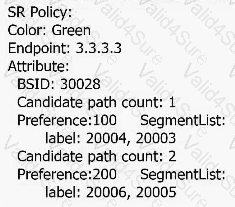
Exhibit 33.1 — Original topology/configuration figure
Select all that apply.
In an EVPN L3VPNv4-over-SRv6 BE scenario, must P routers in a carrier network also support SRv6?
With sub-interface-based HQoS, only one flow queue profile may be applied to a channelized sub-interface.
Which vBRAS communication channel is used to carry forwarding-control data sent from the vBRAS-CP to the vBRAS-UP?
In the ONAP framework, which of the following closed-loop automation processes is used to respond to changing network and service conditions?