
CS0-004 Exam Dumps - CompTIA Cybersecurity Analyst CySA+ V4 (New Version)
Searching for workable clues to ace the CompTIA CS0-004 Exam? You’re on the right place! ExamCert has realistic, trusted and authentic exam prep tools to help you achieve your desired credential. ExamCert’s CS0-004 PDF Study Guide, Testing Engine and Exam Dumps follow a reliable exam preparation strategy, providing you the most relevant and updated study material that is crafted in an easy to learn format of questions and answers. ExamCert’s study tools aim at simplifying all complex and confusing concepts of the exam and introduce you to the real exam scenario and practice it with the help of its testing engine and real exam dumps
Which of the following is the most comprehensive type of report associated with a closed incident?
A server was recently compromised. A security analyst needs to collect artifacts for further analysis before disconnecting the server from the network.
Which of the following artifacts should the analyst collect first?
Which of the following is the most likely reason an organization might implement compensating controls?
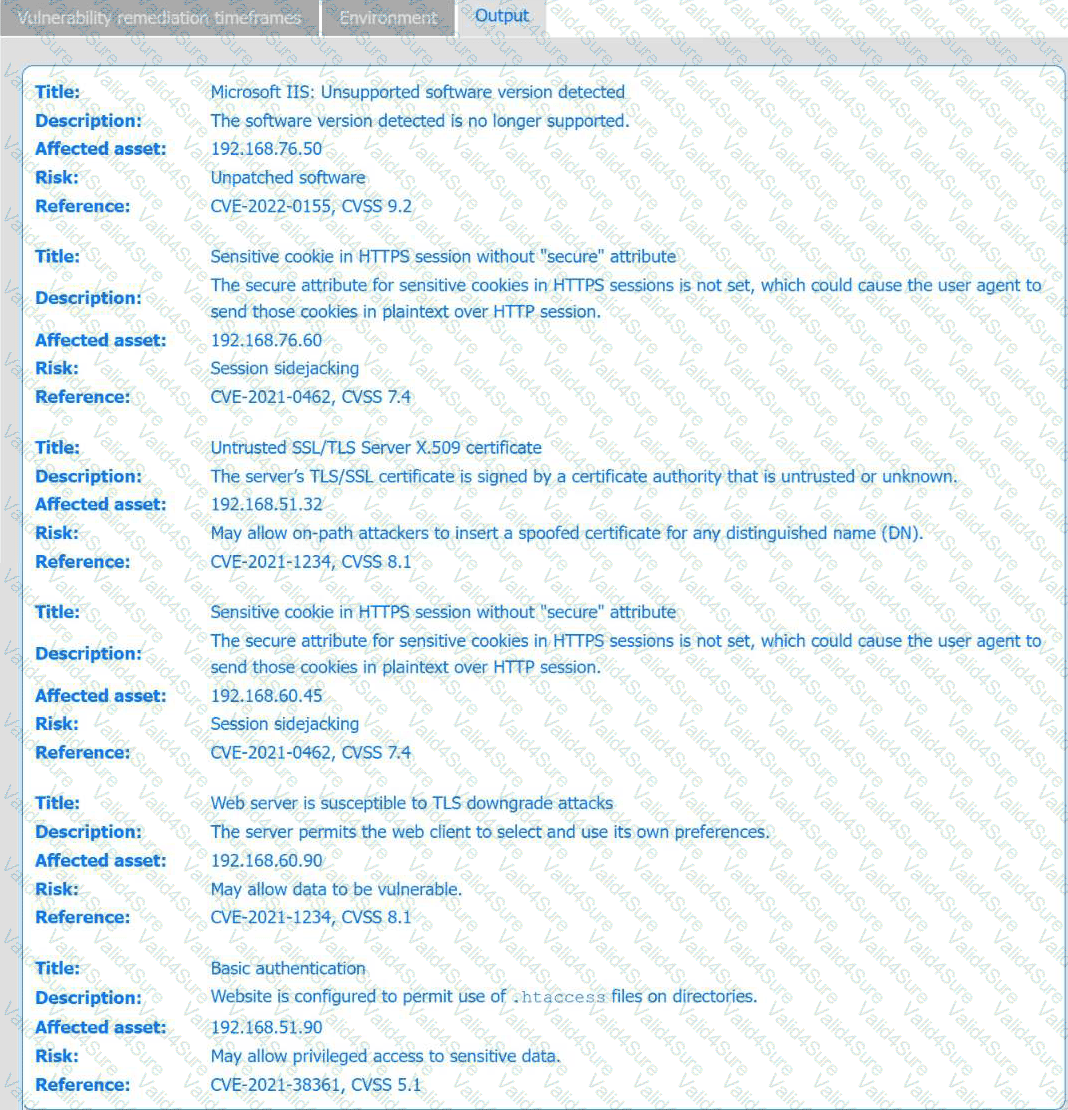
A systems administrator is reviewing the output of a vulnerability scan.
INSTRUCTIONS -
Review the information in each tab.
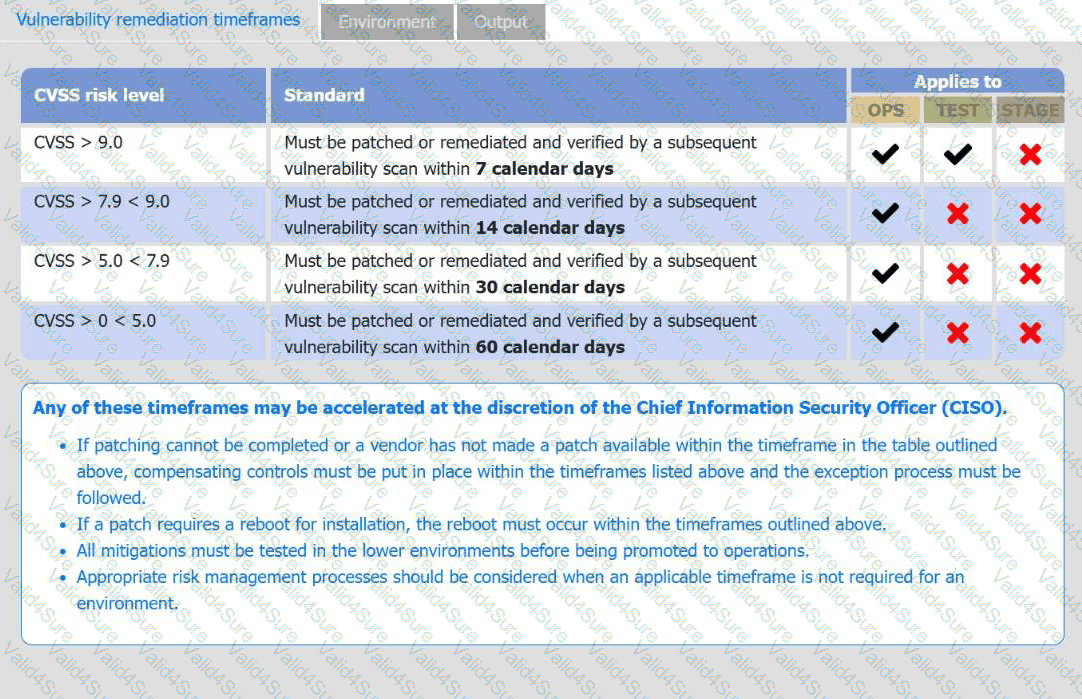
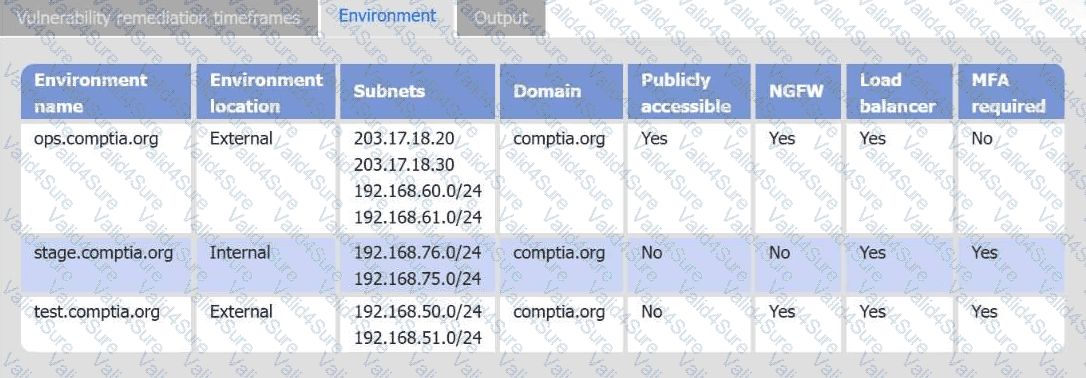
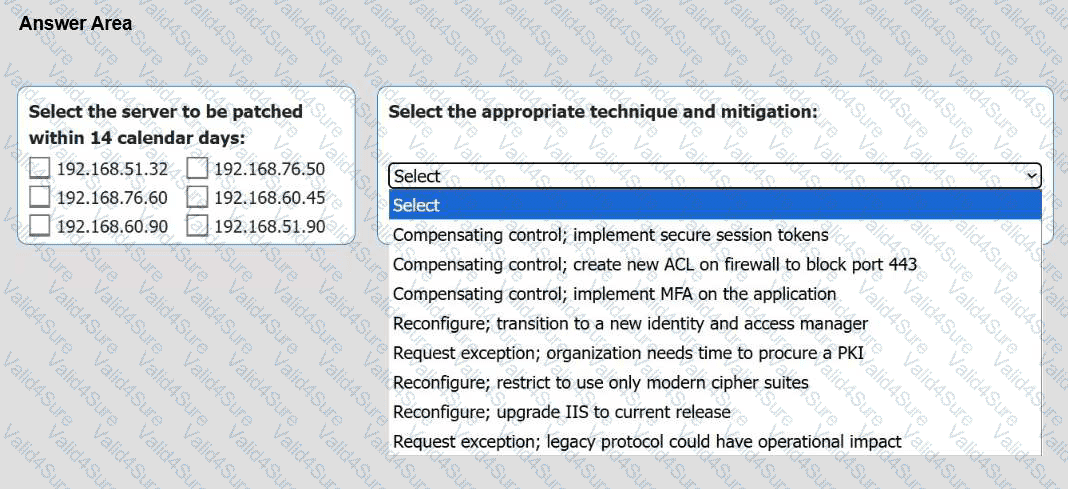
Based on the organization’s environment architecture and remediation standards, select the server to be patched within 14 days and select the appropriate technique and mitigation.
If at any time you would like to bring back the initial state of the simulation, please click the Reset All button.
Which of the following is the most important component to include in the preparation phase of an incident response plan?
A security analyst isolates a Windows 11 workstation from the network after known malware is detected. The list of security information and event management (SIEM) events during the malware installation and timeline does not identify a specific user who was logged in. The security analyst uses the local administrative account to log in and would like a list of logins to the machine.
Which of the following PowerShell commands should the analyst use?
A vulnerability analyst conducts a security assessment on the Remote Desktop Protocol (RDP) security posture within the environment.
The analyst issues the following command for the assessment: nmap -p 3389 --script rdp* 10.0.0.0/24 The analyst receives responses, which are divided into one of the two categories, from 13 out of the 254 hosts:
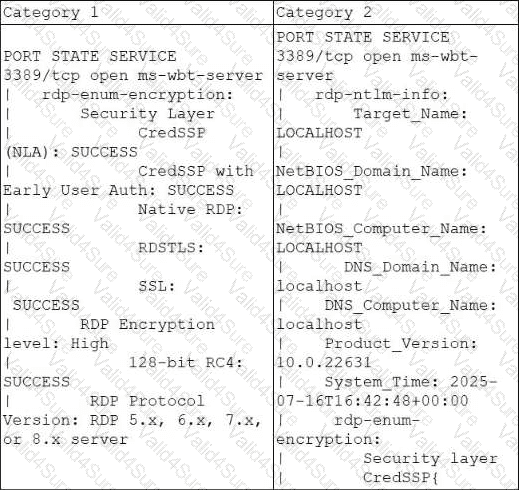
Which of the following conclusions can the analyst make about the output on Category 2?
Despite removing malware from some of the affected hosts, several of an organization's internal resources are still unavailable two weeks after the discovery of a major incident.
Which of the following best describes this phase?